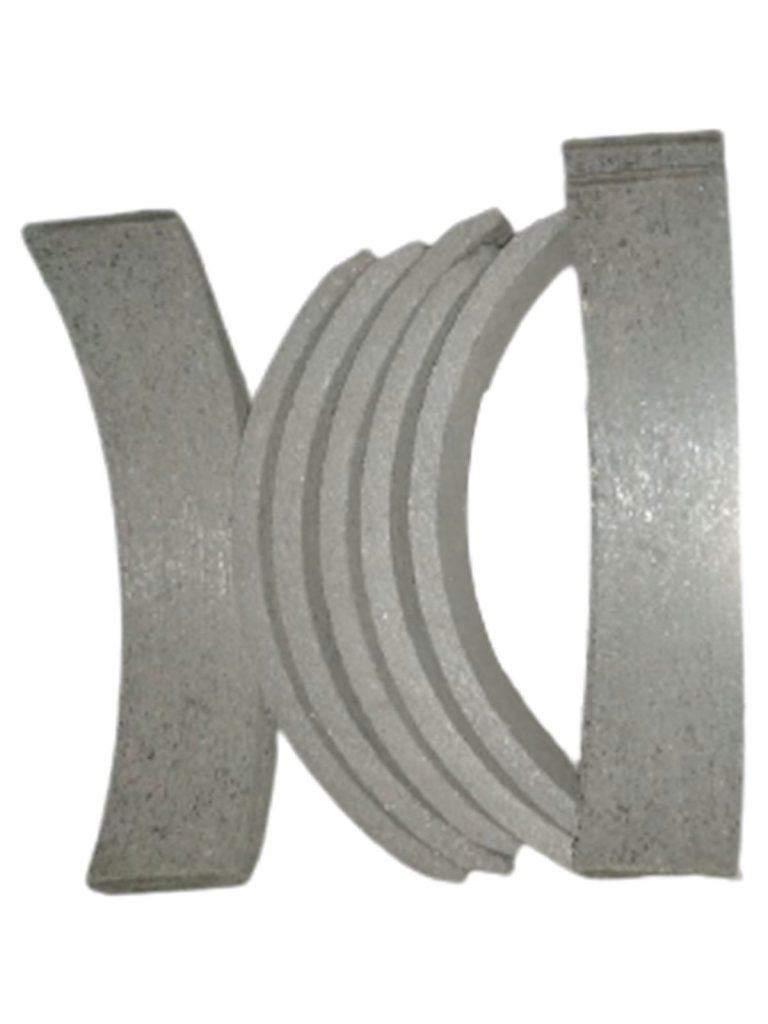
Brake lining is the heat-resistant, high-friction material attached to brake pads or shoes that presses against brake discs or drums to stop a vehicle. It acts as a sacrificial surface designed to absorb energy and wear down over time to prevent damage to expensive brake components. Wikipedia +4
Key Aspects of Brake Linings:
- Purpose: Converts kinetic energy into thermal energy to slow or stop a vehicle.
- Composition: Composed of tough, heat-resistant materials, such as non-asbestos organic (NAO), semi-metallic, or ceramic compounds.
- Assembly: It is typically bonded or riveted to a metal backing, forming a brake pad or shoe.
- Wear Indicators: Worn linings often produce a grinding or squealing sound (due to metal wear indicators) and require replacement, typically every 30,000 to 70,000 miles.
- Types:
- Semi-metallic: Blend of metal fibers, offering good heat dissipation.
- Ceramic: Comprised of ceramic fibers, known for being quiet and durable.
- Organic: Generally quieter but wear faster than metallic options.
Wikipedia +5
As Brake lining – Wikipedia describes, they are critical for maintaining safe braking performance by maintaining a high coefficient of friction, even at high temperatures.